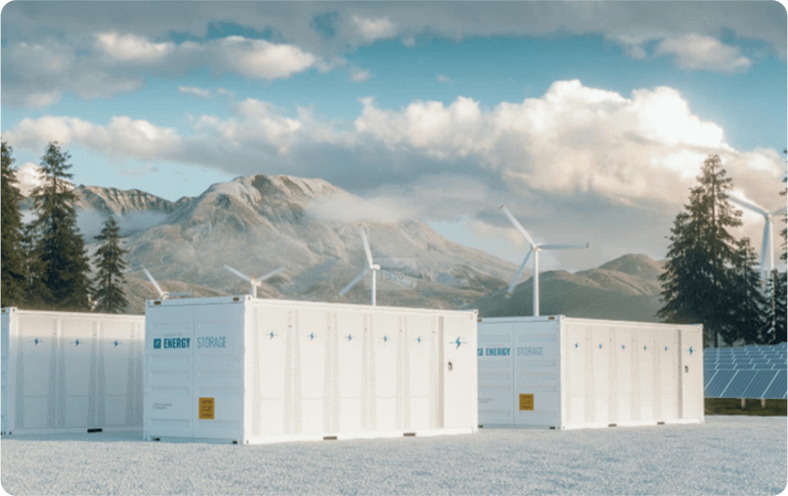
How Battery Energy Storage Systems Solve the EV Charging Grid Bottleneck
The Charging Crisis No One Saw Coming
Electric vehicles were supposed to be a clean, simple solution — plug in, charge up, drive zero-emission. But as EV adoption accelerates, a hard infrastructure truth has surfaced: the electricity grid was never designed for millions of simultaneous high-power charging sessions during the same hours that everyone is cooking dinner and running air conditioning.
The consequences are already showing up in real policy. A Dutch grid operator recently advised EV owners to avoid charging between 4:00 PM and 9:00 PM — exactly when most drivers return home and plug in. Grid operators from Rotterdam to Seoul are being forced to choose between grid stability and charging convenience.
The solution isn't slower EV adoption. It's smarter infrastructure — specifically, Battery Energy Storage Systems (BESS) that store off-peak energy and deliver it during peak demand windows without touching the grid at the critical moment.
Why the Grid Cannot Keep Up
A single DC fast charger running at 150 kW draws as much power as 50 average households. A charging hub with ten such chargers represents the load of an entire residential block, concentrated at one grid connection point — and disproportionately triggered during the evening peak that grid operators already struggle to manage.
The traditional fix is a grid upgrade. But utility infrastructure upgrades can cost hundreds of thousands of dollars and take 12 to 24 months — timelines completely incompatible with the speed of EV adoption. For most commercial sites, the economics simply don't work.
This is precisely the gap that BESS fills.
How BESS Works for EV Charging
A Battery Energy Storage System — most commonly using Lithium Iron Phosphate (LFP) chemistry — acts as an intelligent buffer between the grid connection and the chargers. It charges slowly from the grid during low-demand periods and supplements or replaces grid power during peak hours.
The operating logic is straightforward. A site with a 100 kW grid connection needing to deliver 300 kW during peak hours draws 100 kW continuously from the grid, stores the surplus, then discharges that stored energy when chargers are active. The grid connection stays within its rated limit. The chargers deliver full power. No upgrade required.
The Energy Management System (EMS) monitors state of charge in real time, manages energy dispatch, and coordinates charger output to ensure the site never exceeds its grid connection capacity. This is active load optimization, not passive storage.
Peak Shaving: The Core Commercial Value
Most commercial electricity tariffs include a "demand charge" — a monthly fee calculated on the single highest power draw recorded during the billing period. One demand spike can set the charge for an entire month.
For a charging hub serving multiple vehicles simultaneously during evening hours, demand charges can represent 30–50% of the total electricity bill. BESS peak shaving caps the grid draw at a predetermined maximum, eliminating the spike entirely.
A 500 kWh BESS system at a site with a 150 kW grid limit can generate monthly savings of approximately $4,000 through demand charge reduction and energy arbitrage combined, with a payback period of around 4.2 years and a 10-year net profit exceeding $280,000. For commercial charging operators, this transforms BESS from a capital expense into a quantifiable financial asset.
The 2026 Market Context
Three converging forces make BESS deployment strategically urgent right now.
BESS system pricing has reached historic lows, with project tenders in China falling to as low as $63/kWh in 2025, and turnkey commercial systems in 2026 ranging from $300 to $450 per kWh — a dramatic reduction that fundamentally changes the ROI calculus.
Global deployment is accelerating sharply. Around 315 GWh of BESS capacity was installed in 2025, representing nearly 50% year-on-year growth, with 2026 forecast to exceed 450 GWh. Battery demand from stationary storage jumped 51% in 2025 — outpacing even EV demand growth of 26% — signaling a structural rebalancing toward stationary energy storage.
LFP chemistry has become the undisputed standard, with demand rising 48% year-on-year in 2025. Compared to other lithium chemistries, LFP offers superior thermal stability, longer cycle life (4,000–6,000 full cycles), no cobalt or nickel dependence, and lower cost per kWh — decisive advantages for stationary applications that cycle daily and operate unattended.
Meanwhile, the global EV charging market reached $55.78 billion in 2026, projected to grow at 20.85% annually. At this scale, grid constraints are a global infrastructure challenge, not a localized anomaly.
Key Deployment Applications
Commercial and industrial fleet operators — logistics companies, bus operators, large vehicle fleets — cannot wait for off-peak windows. BESS enables 150–350 kW fast charging at sites with modest grid connections, eliminates demand charge spikes from simultaneous charging, and removes the dependency on expensive utility upgrade timelines.
Highway and remote charging stations often face the most acute grid access constraints. For remote highway locations, a solar-plus-BESS setup in off-grid mode is frequently the only practical path to providing fast charging without laying many miles of new cable — creating genuinely self-sustaining charging infrastructure.
Urban retail and parking destinations need to add charging amenity without pushing building demand above tariff thresholds. BESS acts as a load buffer, enabling fast charging for customers while keeping total site demand within existing connection limits.
Vehicle-to-Grid and What Comes Next
V2G technology enables bidirectional power flow — EV batteries can discharge stored energy back to the grid during peak hours, turning vehicles into distributed energy resources. Grid-forming BESS takes this further, capable of stabilizing the grid independently and enabling true energy independence with off-grid operation.
In this emerging model, stationary BESS and EV fleet batteries work as a coordinated network: fleets charge during off-peak windows, provide grid stabilization during peaks, and reduce site energy costs simultaneously.
Choosing the Right BESS Partner
For B2B buyers, the procurement decision involves more than headline price per kWh. LFP chemistry with internationally recognized safety certifications — IEC 62619, UL 9540, CE marking, and third-party validation from bodies such as TÜV NORD — is the baseline for bankable commercial installations.
Cycle life and warranty matter: a BESS cycling daily will complete 300–365 full cycles per year, so a warranty covering 4,000 cycles at 80% capacity retention provides over a decade of guaranteed useful life. EMS capability — specifically OCPP 2.0.1 compatibility, demand response participation, and remote monitoring — determines the system's long-term operational intelligence. And a modular architecture ensures the system scales as site charging demand grows, without costly replacement cycles.
Conclusion
The Dutch grid restriction advice is an early signal of a challenge that will intensify in every market where EV adoption is accelerating. Unmanaged peak-hour charging demand will exceed local grid capacity at more sites, in more countries, over the coming decade.
BESS systems decouple the timing of grid energy procurement from the moment of vehicle charging, eliminate demand charge exposure, and convert unpredictable peak loads into manageable, predictable energy draws. The BESS market is valued at $14.87 billion in 2026 and is expected to reach $111 billion by 2035 at a CAGR of 21.8% — a trajectory driven precisely by the EV charging grid integration challenge described here.
For charging operators, fleet managers, and property developers evaluating EV infrastructure investment in 2026, BESS is no longer an optional upgrade. It is the foundational architecture that makes fast, reliable, commercially viable EV charging possible at scale.