Sep. 10, 2026
Introduction: Understanding the Power Behind Energy Storage
As energy reliability becomes increasingly critical in today’s grid-connected and renewable-driven world, Battery Energy Storage Systems (BESS) have emerged as key enablers of flexibility, stability, and cost-efficiency. Whether used in commercial facilities, industrial zones, or renewable energy projects, a BESS allows energy to be stored and dispatched exactly when it’s needed. But how exactly does it work? Let’s explore the basics, components, and functions of modern BESS technology.
What Are the Basics of a Battery Energy Storage System (BESS)?
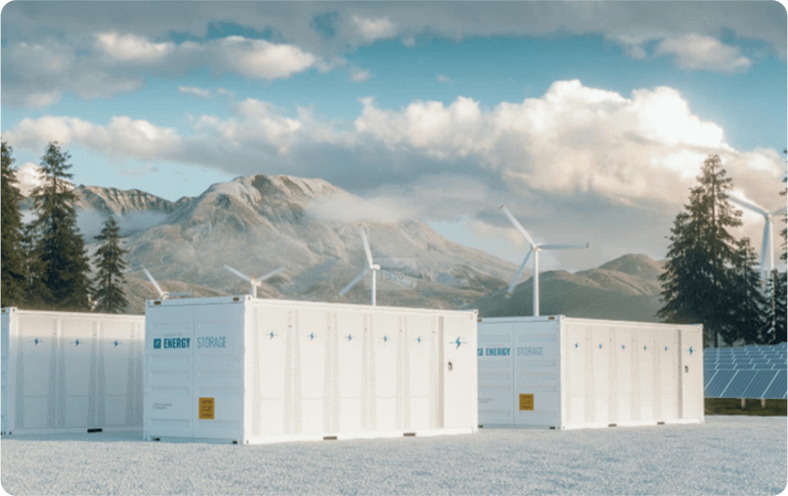
A BESS is a system that stores electricity in batteries and discharges it when demand peaks or grid supply is interrupted. It operates similarly to a water tank: electricity flows in (charging), is stored (in chemical form), and then flows out (discharging) to support loads.
Modern BESS solutions are increasingly used for:
Peak shaving and demand management
Renewable energy integration
Emergency backup power
Frequency and voltage regulation
Key Components of the BESS System
A standard BESS is composed of the following essential components:
Battery Modules: The core energy storage units (often Li-ion or LiFePO₄)
Battery Management System (BMS): Monitors cell voltage, temperature, and health
Inverter/PCS (Power Conversion System): Converts DC to AC and vice versa
Energy Management System (EMS): Controls dispatch strategy, monitors grid interactions
Cooling Systems: Maintains safe operating temperatures (air or liquid-based)
Enclosure/Cabinet: Protects components from environmental hazards
Main Types of BESS Based on Application and Technology
BESS can be categorized in multiple ways, but three primary distinctions are:
FTM (Front-of-the-Meter): Large-scale systems supporting utility grids
BTM (Behind-the-Meter): Installed at commercial or residential sites
Hybrid Systems: Paired with renewable generation (e.g., solar + storage)
In terms of chemistry:
Lithium-Ion (Li-ion): High energy density, fast response
LiFePO₄ (LFP): Enhanced safety and thermal stability
Flow Batteries: Long-duration discharge, suited for stationary applications
How Energy Is Stored and Discharged in a BESS?
The operational cycle of a BESS includes:
Charging Phase: Electrical energy from the grid, solar panels, or generators is converted to DC and stored in battery cells.
Idle/Monitoring Phase: The system monitors state-of-charge, temperature, and demand triggers.
Discharging Phase: When required, the stored DC power is converted to AC and delivered to loads or back to the grid.
These systems are typically programmable to charge when electricity is cheap and discharge during peak rates or outages.
Understanding the Role of Inverters in BESS
The inverter—or power conversion system (PCS)—is the bridge between stored energy and usable power. It performs:
DC to AC conversion (discharging to grid or load)
AC to DC conversion (charging from grid or PV)
Voltage and frequency regulation
Synchronization with grid standards
Advanced inverters also enable reactive power support and islanding functions.
How a BESS System Is Charged from the Grid or Solar?
Charging methods vary depending on setup:
From the Grid: BESS charges during off-peak times (low rates)
From Solar or Wind: Excess renewable generation is stored during the day
From Diesel Generators: Used in microgrids for added backup
Smart EMS software ensures optimal charging based on tariff schedules, weather forecasts, and system demand.
Is BESS Operation Noisy or Quiet?
Most BESS units operate quietly.
Residential/Home Units: Usually <50 dB (similar to a refrigerator)
Industrial BESS: May produce fan noise or coolant circulation, but still quieter than diesel generators
Liquid-cooled BESS are typically quieter than air-cooled systems.
Is a BESS System AC or DC?
Internally: Battery cells store energy as Direct Current (DC)
Externally: Through the inverter, it interfaces with the grid or loads as Alternating Current (AC)
Some hybrid systems offer DC-coupled solutions for solar + storage efficiency.
How Does a BESS Connect and Interact with the Grid?
A BESS can connect:
Directly to the grid (FTM) to provide ancillary services
Behind the meter (BTM) to support internal loads and reduce grid dependence
Via hybrid inverters in solar + storage systems
Smart grid integration is managed via EMS and inverter protocols (e.g., Modbus, IEC 61850).
How Can a BESS System Generate Revenue?
BESS can provide multiple revenue streams:
Peak shaving: Lower electricity bills by avoiding high-demand charges
Energy arbitrage: Buy electricity cheap, sell or use it when prices rise
Grid services: Frequency regulation, capacity reserves (in deregulated markets)
Backup power: Avoid loss of business continuity or product spoilage
Properly sized BESS can achieve payback in 2–5 years, depending on use case.
Why BESS Matters in Today’s Energy Landscape?
As electricity demand grows and grids become more fragile, the ability to store energy locally and deploy it instantly has become crucial. From data centers to dairy farms, hospitals to homes, BESS is now part of the global transition toward more resilient, cleaner, and smarter energy systems.
Conclusion: BESS as the Backbone of Energy Resilience
Battery energy storage systems are no longer niche infrastructure—they are central to the way modern power systems function.
Whether you’re a facility manager, renewable energy project developer, or homeowner, understanding how a BESS works—and what it can do for your operations—is key to future-proofing your energy strategy.
Latest News
Related Solutions
Commercial & Industrial Solutions
+ -Residential Solutions
+ -Utility-Scale Solutions
+ -