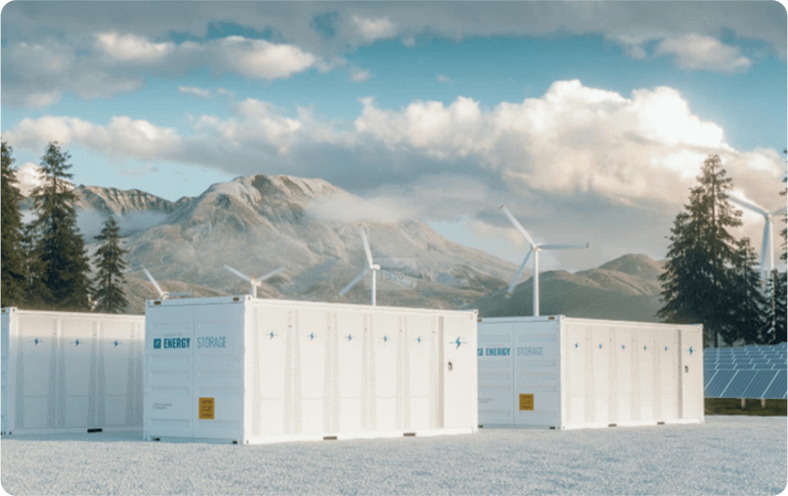
The Netherlands Market: Why Businesses Can't Wait
The Netherlands stands at a critical inflection point in its energy transition. In the first half of 2024, renewables made up more than 50% of domestic energy production, yet this rapid shift has come with a significant consequence: almost the entire grid in the Netherlands is now operating at full capacity, and newly built photovoltaic projects face longer wait times to connect to the grid.
For Dutch businesses, this grid congestion crisis is not an abstract policy issue — it directly impacts energy bills, operational reliability, and competitiveness. The electricity grid networks in the Netherlands are becoming increasingly stretched as they respond to increased levels of renewable energy generation and the electrification of the economy, resulting in higher levels of congestion that increase the risk of blackouts and prevent new generation capacity from being developed.
The segment across Europe is projected to grow at a CAGR of 10.3% between 2025 and 2034, driven by the growing need for efficient energy management among businesses, coupled with the rising cost-effectiveness of technologies.
Project Background: A Dutch Business Facing Real Energy Challenges
Our Netherlands client — a growing commercial enterprise operating energy-intensive facilities — was facing a set of challenges that are increasingly common across Dutch industry:
Soaring peak demand charges: Dutch electricity tariffs heavily penalise peak-hour consumption, pushing energy costs to unacceptable levels.
Grid connection constraints: With the Dutch distribution grid at or near capacity, securing additional grid capacity for business expansion had become extremely difficult and expensive.
After evaluating multiple providers in the European market, the client selected SolarEast based on our proven technology, competitive specifications, full turnkey delivery capability, and our track record of successful European installations.

The SolarEast Solution: 5 × 261kWh + 250kW Hybrid Inverter
System Architecture
SolarEast's engineering team designed a comprehensive 1,305kWh / 1,250kW system tailored to the client's load profile, solar generation data, and Dutch grid interconnection requirements.
Core Components:
① SolarEast 261kWh (× 5)
Each cabinet is a self-contained, industrial-grade unit built around LFP cell chemistry — the gold standard for applications in Europe due to its:
· ✅ Superior thermal stability and safety (no thermal runaway risk)
· ✅ Long cycle life: 6,000+ cycles at 80% DoD
· ✅ High round-trip efficiency: >93%
· ✅ CE certified, compliant with EU Low Voltage Directive and EMC Directive
Five units combined deliver a total usable capacity of 1,305kWh — sufficient to provide the client with hours of peak-load coverage and substantial daily energy arbitrage opportunity.
② 250kW Hybrid Inverter (× 5)
Each 261kWh is paired with a SolarEast 250kW Three-Phase Hybrid Inverter, forming a fully integrated AC-coupled energy storage unit. The hybrid inverter architecture enables:
· ✅ Simultaneous solar PV integration — the system charges from the client's existing rooftop solar installation and from the grid during off-peak tariff periods
· ✅ Seamless grid interaction — bidirectional power conversion for both charging (grid/solar → battery) and discharging (battery → loads/grid)
· ✅ Smart peak shaving — the inverter's integrated EMS continuously monitors demand and automatically dispatches stored energy to flatten the client's demand curve, preventing costly peak tariff triggers
· ✅ Grid frequency support — the system participates in local grid frequency regulation, an increasingly valued service as the Dutch TSO TenneT manages congestion across its network
On-Site Delivery: 5 Cabinets Arrive in the Netherlands
The second image captures the crane-assisted unloading of one cabinet from a transport trailer — demonstrating SolarEast's full logistics support capability. Our team coordinated the entire delivery process, working with the client and local Dutch installation partners to ensure smooth handling of each unit. The FASSI crane loader and professional installation team ensured that every cabinet was positioned safely and efficiently.
Key Delivery Highlights:
· ✅ All 5 units delivered on schedule, fully intact
· ✅ Factory pre-tested and pre-configured before shipment

Results & Benefits: What the Client Achieved
Following commissioning, the SolarEast 1,305kWh delivered immediate and measurable results for the Dutch client:
Maximised Solar Self-Consumption
Rather than exporting surplus solar energy back to the grid at low feed-in tariff rates (or having it curtailed entirely due to Dutch grid congestion), the client's solar PV energy is now stored in the SolarEast during the day and consumed during evening peak hours — dramatically increasing the ROI on the existing solar investment.
Business Continuity & Power Security
The Netherlands grid, while generally reliable, faces increasing congestion-related stress. The SolarEast provides the client with a genuine backup power capability for critical loads — protecting operations, inventory, and productivity during any grid disruptions.
Reduced Carbon Footprint
By maximising consumption of on-site solar and shifting consumption away from high-carbon peak-grid periods, the client has meaningfully reduced its Scope 2 carbon emissions — supporting its sustainability targets and strengthening its ESG credentials for customers, investors, and regulators.
Full Remote Monitoring
Via the SolarEast cloud monitoring platform, the client's energy management team has real-time visibility of state-of-charge, power flows, system health, and cumulative savings — from any device, anywhere.
Related Solutions
Residential Solutions
+ -Commercial & Industrial Solutions
+ -Utility-Scale Solutions
+ -