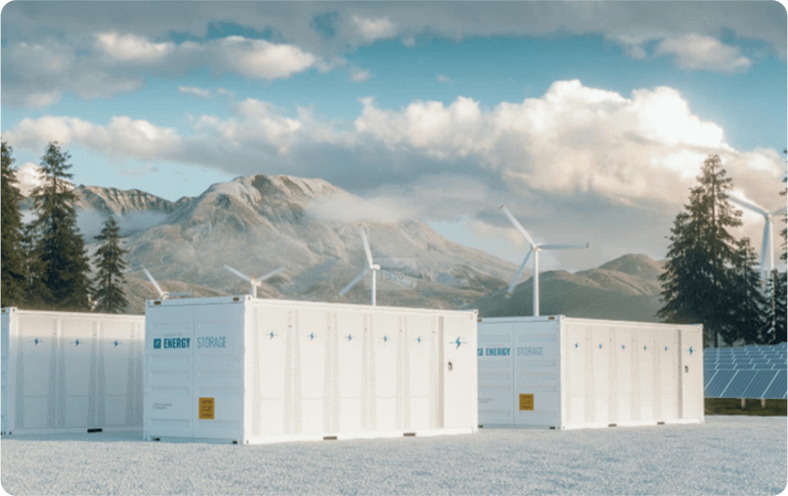
This case study will explore the advantages of liquid cooling technology, the system configuration, and its application in the China market. It will highlight how energy storage systems can enhance energy efficiency, reduce costs, and promote sustainable development.

Liquid cooling technology is one of the standout features of this system. Compared to traditional air cooling systems, liquid cooling offers better efficiency in managing the temperature of battery modules, ensuring optimal performance and stability over extended periods.
By using liquid cooling, the 5MWh maintains its efficiency in both high and low-temperature environments. This helps prevent overheating and thermal stress on the battery cells, which can otherwise degrade performance and reduce system lifespan. The liquid cooling system ensures the system runs efficiently, minimizing energy loss and prolonging the system’s operational life, thus reducing maintenance and downtime.
The system ensures the batteries operate at optimal temperatures, improving efficiency, reducing energy waste, and extending the system’s lifespan.
By storing excess solar energy, businesses can use it during high-demand periods, significantly lowering energy costs and reducing reliance on expensive grid electricity.
By optimizing the use of renewable energy and reducing reliance on fossil fuels, this system helps lower carbon emissions, contributing to a cleaner environment.
The ensures a continuous power supply, even during grid outages or power fluctuations, making it essential for industrial operations that require uninterrupted energy.
The liquid cooling technology improves system longevity and operational efficiency, offering a long-term return on investment with lower maintenance costs.
Related Solutions
Commercial & Industrial Solutions
+ -Residential Solutions
+ -Utility-Scale Solutions
+ -