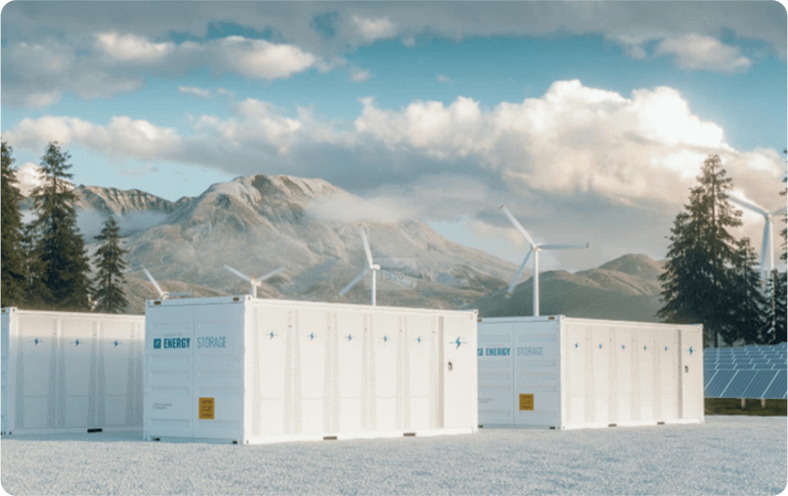
As Syria continues to endure frequent power outages and severe energy shortages, a growing number of commercial & industrial (C&I) facilities, businesses, and critical institutions (like medical centers) are urgently seeking reliable, off-grid electricity solutions. The demand for robust solar photovoltaic energy storage systems is skyrocketing. With average daily grid power limited to just 2–4 hours in many urban areas, the question is no longer if Syria needs storage, but which solar energy storage cabinet is the most appropriate and cost-effective answer for essential services. This article provides an in-depth analysis and introduces high-capacity, off-grid-ready solutions like the 215 kWh Hybrid Solar Energy System Storage Cabinet and the 261 kWh Battery Energy Storage System tailored exclusively for the Syrian market.
Is Syria currently suffering from electricity shortages? How severe is the power outage situation?
Yes, Syria is still experiencing a severe electricity shortage.
Most urban areas receive only 2–4 hours of daily grid electricity supply, while many rural regions operate almost entirely off-grid.
Key reasons include:
Damage to power plants and transmission lines.
Complete breakdown of social maintenance systems and supply chains.
Contracted economy, making the national grid recovery extremely difficult.
As a result, millions of Syrians rely on:
What energy sources does Syria currently use? Can solar energy replace traditional energy?
Syria's traditional energy sources primarily consist of natural gas, fossil fuels, and a limited number of hydroelectric power facilities. However, production capacity and supply networks for these resources have been severely compromised. Solar energy has now become the fastest-growing energy source due to:
Syria's location in a high solar irradiation zone (annual average exceeding 2000 kWh/m²).
Declining solar installation costs.
Ability for users to generate power independently, without relying on the unstable national grid.
Solar + storage systems are rapidly emerging as the single most sustainable and essential power supply solution for Syria.
Why do Syrian households need energy storage batteries? Are solar panels alone enough already?
Solar panels alone cannot guarantee a continuous power supply, as they only generate electricity during the day, creating a nighttime power gap. Syrian households typically need electricity for:
Evening lighting.
Nighttime operation of refrigerators, fans, and air conditioners.
Backup power for medical equipment and small commercial loads.
Therefore, energy storage systems (such as LiFePO4 batteries) are essential for:
Which battery type is more suitable for the Syrian market? Lead-Acid vs. Lithium Battery Comparison
Given Syria's current energy landscape, energy storage devices are not merely redundant backup systems but critical assets for ensuring a stable, uninterrupted energy supply for homes and commercial operations. Therefore, key decision-making factors include usability, heat resistance, cycle life, and maintenance costs.
While traditional lead-acid batteries have lower upfront costs, they suffer from:
These limitations make lead-acid batteries ill-suited for Syria's high-temperature environment and frequent power cycling.
In contrast, lithium batteries, particularly LiFePO4 (Lithium Iron Phosphate) technology, offer:l Higher energy density.
Longer cycle life (6,500+ cycles).
Superior heat resistance and deep-cycle capability.
Stable performance under high temperatures and frequent charging/discharging.
Enhanced safety, with a significantly lower risk of thermal runaway.
Given Syria's high temperatures, unstable grid, and growing reliance on solar power, LiFePO4 batteries housed in a robust solar energy storage cabinet offer better long-term return on investment and operational value, making them the more suitable energy storage solution.
How much solar energy storage capacity does a Syrian household need?
Based on household size and consumption habits, the following capacities are recommended:
| Household Size | Recommended Battery Capacity | Recommended PV Power |
| 1–2 people | 2–3 kWh | 600–1200 W |
| 3–5 people | 5–7 kWh | 1.5–3 kW |
| Large household/small shop | 10–15 kWh | 3–5 kW |
| Hospital/Business/School | 20–100 kWh | 10 kW+ (distributed) |
Commercial & Industrial Off-Grid Solutions: Securing Syria’s Economic Backbone
The scale of power shortages in Syria means that essential services, manufacturing, and commercial activities cannot rely on small residential systems. Continuous operations require large-scale, high-capacity, and highly reliable 261kWh Battery Energy Storage System solutions.
The Imperative for C&I Energy Storage in Syria:
Critical Operational Continuity: Factories, water treatment plants, telecom towers, large hospitals, and data centers must run 24/7. An off-grid solar + storage solution ensures immediate, seamless power transfer during daily grid failures, minimizing downtime.
Diesel Generator Replacement: Moving from expensive, polluting, and logistically complex diesel generators to a solar energy storage cabinet offers significant operational cost savings (OPEX) and a sustainable energy path.
Scalable Microgrids: Large C&I facilities can establish independent microgrids, using their solar photovoltaic energy storage system as the core, protecting against the complete collapse of local infrastructure.
SolarEast BESS’s High-Capacity Off-Grid Cabinets for C&I
SolarEast BESS offers two purpose-built, high-voltage BESS cabinets designed for the demands of Syria’s C&I sector, utilizing long-cycle LiFePO4 chemistry and advanced thermal management to suit the high-temperature environment.
| Product Solution | Capacity & Power | Ideal Applications | Key Keyword Focus |
| C&I Robust Cabinet | 215kWh Energy | Medium-sized factories, large supermarkets, cold storage facilities, and agricultural irrigation pumps. | 215kWh solar energy storage system battery 215kWh hybrid solar energy system storage cabinet |
| C&I Premier Cabinet | 261kWh Energy (High Power) | Large hospitals/clinics, data centers, manufacturing plants, and telecom switching stations requiring sustained high power output. | 261kW battery energy storage system solar energy storage cabinet |
Both cabinets are engineered to integrate perfectly with solar PV arrays, function purely off-grid, and provide the dependable, sustained power delivery that is absolutely critical for Syria’s recovery and stability.
Which solar battery suppliers are established in the Syrian market?
Syrian users tend to prefer internationally certified, scalable energy storage brands suitable for off-grid applications.
SolarEast BESS is a notable provider, offering:
LiFePO4 battery technology.
Residential and Commercial & Industrial (C&I) solar energy storage solutions.
Support for both on-grid and off-grid systems.
Comprehensive OEM/ODM customizations.
Multiple installation references across the Middle East.
SolarEast BESS's Recommended Energy Storage Solutions for Syria
5 kWh wall-mounted battery
1.5 kW solar panels
Suitable for small households: lighting, refrigerator, fans, and communication devices
10 kWh all-in-one LiFePO4 battery
Ideal for areas with severe power cuts, enabling a 24/7 power supply.
20–50 kWh modular energy storage system
5–10 kW solar array
Reliable power for refrigeration, network systems, and medical equipment.
Solar + Storage: Becoming Syria's Future Energy Backbone
With the national grid unlikely to recover in the short term, distributed solar + storage systems offer:
For Syria, this is not just an alternative energy source—it is a critical infrastructure for restoring socioeconomic operation.
Interested in Getting a System Quotation or Partnership Invitation for the Syrian Market?
Contact the SolarEast BESS Energy Storage Solutions Team. We provide ODM/OEM system integration services and long-term technical support for the Middle East market.